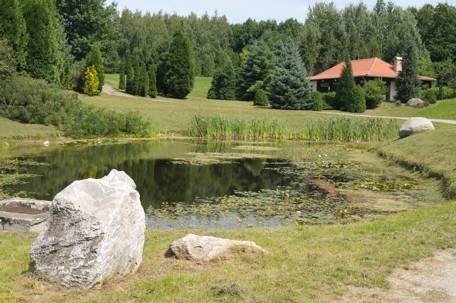
If you’ve ever noticed a large, grassy basin in your neighborhood that fills with water after a heavy Georgia rainstorm, you’re looking at a retention pond. These aren't just decorative ponds; they are carefully engineered systems designed to catch "runoff" water from streets and roofs. By holding this water and letting it drain slowly, they prevent your yard from flooding and keep local storm drains from overflowing.
While they are vital for property safety, one of their biggest threats is actually something we love: trees. When trees grow unchecked around these basins, they can cause hidden damage that leads to expensive repairs or neighborhood drainage issues.
Why Trees and Retention Ponds Don't Always Mix
It is natural to want greenery around water, but retention ponds have specific needs to stay functional. Unlike a natural pond in the woods, a neighborhood retention pond has man-made walls (called dams or embankments) and concrete pipes that must stay clear. When large trees grow on the slopes of a pond, their heavy weight can cause the soil to slide or collapse. Furthermore, as trees grow, their roots search for water, often pushing into the very pipes meant to drain the pond and causing them to crack or clog.
Understanding the balance between a beautiful landscape and a functional drainage system is the first step in protecting your investment. You don't have to remove every bit of green, but you do need to be selective. Keeping the structural parts of the pond clear of woody growth ensures the water goes where it is supposed to go during a storm.
To keep your pond in top shape, look out for these specific growth patterns:
- Saplings growing directly on the dam or the steep side slopes of the basin.
- Willow trees or water-loving species that are planted too close to concrete drainage pipes.
- Overhanging branches that drop excessive leaves and "organic litter" into the water.
- Dead or leaning trees that could fall and block the overflow structure during a storm.
The Danger of Deep Roots and Dam Integrity
The most critical part of many retention ponds is the dam or the embankment. These are usually made of tightly packed soil designed to hold back thousands of gallons of water. When a tree grows here, its roots create pathways through that packed soil. If a tree dies or is blown over in a storm, those roots rot or pull out, leaving "pipes" or holes in the dam. This can lead to internal erosion, where water starts leaking through the dam instead of over the designated spillway.
This process is often invisible until it is too late. By the time you see a crack in the embankment or a sinkhole near the pond’s edge, the structural damage is already well underway. Regular maintenance prevents these root systems from ever becoming large enough to threaten the pond's "seal." It is much easier to manage a small shrub than it is to repair a collapsed earthen wall.
To prevent structural failure, consider these proactive maintenance steps:
- Mow the pond slopes regularly to prevent woody plants from ever getting started.
- Remove any tree species with aggressive, water-seeking root systems within 20 feet of the pond.
- Inspect the area around the "outflow" pipe for any roots that might be cracking the concrete.
- Replace large trees on embankments with native grasses that have shallow, stabilizing roots.
Managing Debris to Prevent Clogging
Even if a tree isn't growing directly on the pond’s edge, it can still cause trouble from a distance. During the fall, or after a big summer thunderstorm, trees drop leaves, twigs, and bark. In a normal yard, this is fine, but in a retention pond, this debris floats toward the "trash rack"—the metal grate that covers the drain pipe. If that grate gets covered in leaves and branches, the water has nowhere to go.
When the drain is blocked, the pond level rises above its design limit. This puts extra pressure on the sides of the pond and can cause water to back up into the street or even into nearby basements. Keeping the area around the pond clear of "high-drop" trees—those that shed a lot of material—is a simple way to keep the water flowing freely.
Managing the "litter" from your trees involves a few simple habits:
- Clear away fallen limbs and piles of leaves from the bottom of the basin before the rainy season.
- Prune branches that hang directly over the water to reduce the amount of organic matter that falls into the water.
- Avoid using the retention pond area as a dumping ground for yard waste like grass clippings.
- Monitor the water level after a storm to see if it is draining at its normal speed.
How Professional Care Keeps Your Waterways Healthy
Maintaining a retention pond isn't quite the same as standard backyard gardening. It requires a bit of a "perfectionist" eye to spot potential risks before they become emergencies. Because these ponds are part of a larger ecosystem, the way we treat the trees around them affects the water quality for everyone downstream. For example, removing a tree safely without disturbing the soil prevents silt and mud from washing into our local Georgia waterways.
Expert care ensures that your property stays safe while remaining beautiful. Professional teams have the equipment to handle "tight space" removals if a tree has grown too close to a drainage structure. They can also provide a risk assessment to tell you which trees are fine to keep and which ones are ticking time bombs for your pond’s integrity.
When you work with a professional team, you can expect a comprehensive approach:
- A clear plan for tree removal that focuses on protecting the pond's shape and soil.
- Detailed tree trimming to lift the canopy and keep debris out of the drainage grates.
- Expert stump grinding to ensure roots stop growing without leaving a massive hole in the ground.
- Guidance on emergency tree care if a storm has already caused a blockage in your drainage system.
Investing in Your Property’s Future
Retention pond maintenance is one of those tasks that is easy to ignore until it becomes a major problem. However, staying on top of the growth around your pond is one of the best ways to protect your property value and your peace of mind. A well-maintained pond doesn't just work better; it looks better, too. It becomes a clean, functional part of the landscape rather than an overgrown eyesore that keeps you worried every time the clouds turn grey.
By taking a proactive approach, you avoid the high costs of emergency repairs and the stress of potential flooding. Whether it’s clearing out a few saplings or handling a large-scale removal near a delicate structure, keeping your pond clear is a win for you and the environment.
If you’ve noticed trees creeping closer to your pond or branches blocking your drainage pipes, it’s a great time to get an expert opinion. ArborForce Tree Services is here to help Metro Atlanta homeowners keep their landscapes safe and functional. We specialize in precision work and meticulous cleanup, ensuring your yard stays in top shape.
Don’t wait for the next big storm to find out if your retention pond is blocked. Schedule a consultation through our online form or call us at (470) 319-6625 for a free estimate and professional peace of mind today.