Most of us don’t think twice about our trees until a heavy Georgia storm rolls through or we notice a pile of yellow leaves in the middle of summer. However, just like we go to the doctor for an annual checkup, our trees need professional evaluations to stay strong and safe.
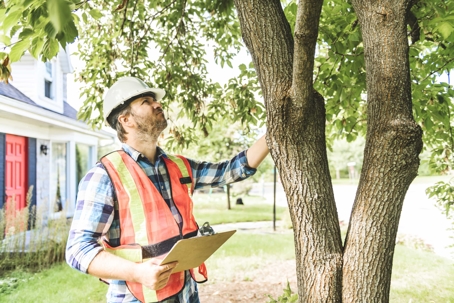
An arborist assessment is essentially a “physical exam” for your trees. Instead of just looking at the surface, a certified professional looks at the tree as a living system, identifying hidden issues before they turn into a fallen limb or a lost asset.
The Ground-Up Approach: Starting at the Roots
A tree’s health starts where you can’t see it: underground. When a professional arrives at your property, they don’t just look up; they start by examining the “root flare”—the spot where the trunk widens as it enters the soil. If this area is buried too deep or covered in excess mulch, it can actually suffocate the tree. We also look for “girdling roots,” which are roots that wrap around the trunk like a tight belt, slowly cutting off the tree’s ability to move water and nutrients.
The soil around the tree tells a story, too. Compacted soil from heavy lawn equipment or construction can prevent roots from getting the oxygen they need to breathe. By checking the ground first, an expert can determine whether a tree’s “foundation” is solid or needs a little help to thrive.
To understand what’s happening beneath the surface, keep an eye out for these red flags:
- Soil that has been recently moved or piled high against the bark of the tree.
- Mushrooms or fungal growth are growing at the very base of the trunk.
- Cracks in the earth that might suggest the root ball is shifting or lifting.
- Standing water that doesn’t drain, which can lead to “root rot.”
Reading the Bark and the Trunk
Think of a tree’s bark like our skin—it’s the first line of defense against infection and pests. A healthy tree should have relatively consistent bark patterns. If you see deep cracks, “bleeding” sap, or areas where the bark is falling off to reveal smooth wood underneath, it’s a sign that the tree is under significant stress. These spots, often called “cankers,” can be entry points for diseases that weaken the wood’s structural integrity.
Experts also check for “included bark,” which happens when two trunks grow too close together in a “V” shape. Instead of the wood fusing together strongly, the bark grows between them, creating a weak point that is very likely to split during a high-wind event. Identifying these structural weak spots early allows for preventive care rather than emergency cleanup later.
During a trunk inspection, focus on these key areas:
- Cavities or hollow spots that could indicate internal decay or nesting pests.
- The presence of “sawdust” or tiny holes is often a sign of wood-boring insects.
- Vertical cracks that go deep into the wood rather than just sitting on the surface.
- The “lean” of the tree, specifically if it has moved recently or is a “natural lean.”
Evaluating the Canopy and Leaves
The very top of the tree, or the canopy, is often the most visible indicator of health. Professionals look for “dieback,” which is when the very tips of the branches are bare and brittle while the rest of the tree is green. If a tree is losing leaves from the top down, it often means the root system is struggling to push water all the way to the top. The color and size of the leaves also matter; if they are smaller than usual or turn yellow out of season, the tree might be lacking essential nutrients.
Checking the canopy also involves looking for “widow-makers”—dead branches that are hanging up in the tree and could fall at any moment. By thinning out the canopy through professional tree trimming, you can reduce the “sail effect,” which is when a thick canopy catches too much wind and causes the whole tree to blow over in a storm.
A healthy canopy should generally show:
- Consistent leaf color and density throughout the entire crown of the tree.
- Annual growth—the small “nodes” on the twigs should show the tree is adding length each year.
- A balanced shape that isn’t putting too much weight on one side of the structure.
- Minimal deadwood, especially on the larger, primary branches.
The Value of Professional Perspective
While many homeowners can spot a dead branch, it takes a “perfectionist” eye to see the subtle signs of a declining tree. Certified experts use their training to distinguish between a minor pest issue that will go away on its own and a serious infestation like the Emerald Ash Borer. The goal is always to save the tree whenever possible through proper tree care and health programs.
When a tree is assessed professionally, it isn’t just about finding problems; it’s about creating a roadmap for the future. Whether that means applying specific nutrients or performing a tree removal because the tree has become a safety risk, you get the peace of mind that comes from expert knowledge.
Choosing a professional assessment provides several key benefits:
- Safety: Catching structural flaws before a branch falls on a roof or power line.
- Property Value: Healthy, mature trees can significantly increase your home’s resale value.
- Cost Savings: It is much cheaper to prune a tree or treat a disease than it is to remove a massive, dead oak.
- Precision: Utilizing advanced equipment like grapple trucks for tree removal or stump grinding if the tree cannot be saved.
Protecting Your Living Assets
Your trees are more than just part of the yard; they are living assets that provide shade, beauty, and privacy. Taking the time to understand how their health is measured helps you become a better steward of your property. A simple walk-through with a professional can reveal a lot about the life of your landscape and help you avoid the stress of “the unexpected” during the next big storm.
If you are worried about a leaning trunk, thinning leaves, or just want to make sure your trees are ready for the season, we are here to help. ArborForce Tree Services brings over 15 years of experience and a neighborly approach to every assessment. We pride ourselves on transparent communication and leaving your property looking better than we found it.
Is your tree showing signs of stress or storm damage? Don’t leave it to chance. Fill out our online form or call us at (470) 319-6625 for a professional health assessment and keep your property safe today.