Know your trees. Plan their future.
Your trees are a lasting investment. Turn scattered concerns into a clear picture of what you have, what needs attention, and what comes next.
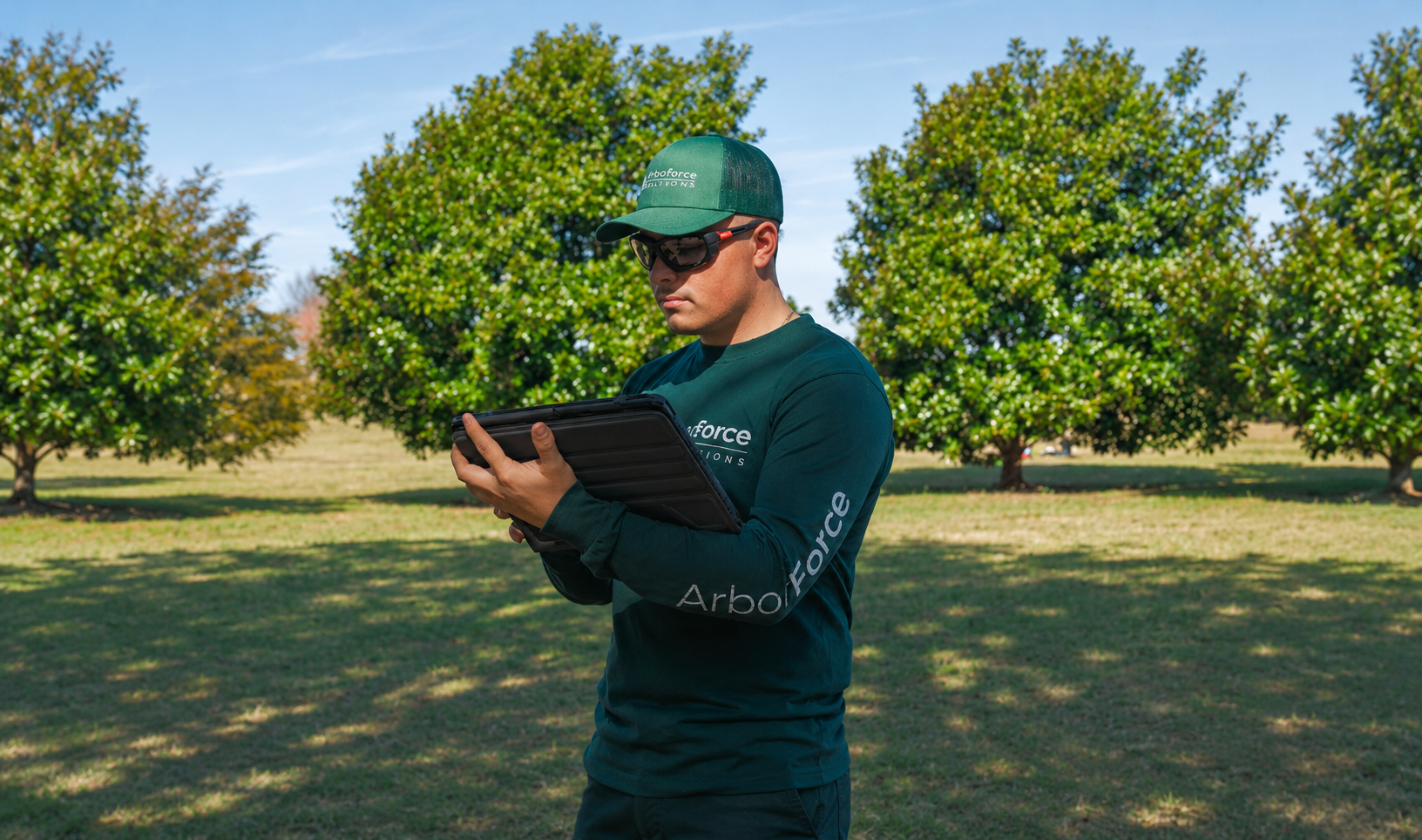
A clearer view of your landscape. A practical plan for its care.
- ISA Certified Arborists on staff
- Locally owned in Lawrenceville, Georgia
- Serving communities across Metro Atlanta
Every tree has a story. Give it a record.
Connect a tree’s location with the observations and recommendations that help guide its care. Select a tree below to explore an example.
White oak
Quercus alba- Trunk diameter (DBH)
- 28 inches
- Visible condition
- Good
- Location
- Common-area lawn
- Care priority
- Routine maintenance
Retain and plan routine pruning. Maintain a mulched root zone and monitor for changes.
Red maple
Acer rubrum- Trunk diameter (DBH)
- 16 inches
- Visible condition
- Signs of stress
- Location
- Parking island
- Care priority
- Diagnostic follow-up
Investigate root-zone conditions and canopy thinning before selecting a treatment plan.
Loblolly pine
Pinus taeda- Trunk diameter (DBH)
- 22 inches
- Visible condition
- Dead branches observed
- Location
- Along walking path
- Care priority
- Pruning review
Review deadwood and path use with an arborist; define pruning needs and any further assessment.
Crape myrtle
Lagerstroemia indica- Trunk diameter (DBH)
- 6 inches
- Visible condition
- Good
- Location
- Building entrance
- Care priority
- Selective clearance
Plan selective clearance pruning that respects the tree’s size and natural form.
Fictional trees and illustrative map; not a site assessment. Records, mapping, and recommendations are defined by your project scope.
-
Locate & identify
Tree identification, species, trunk diameter, and mapped locations within the agreed survey area.
-
Observe & document
Visible health and structural observations, growing conditions, and supporting photographs where included.
-
Recommend & prioritize
Care needs, recommended follow-up, and maintenance priorities to support a practical management plan.
Clarity for the decisions ahead.
An inventory is most useful when it helps you decide where to focus time, care, and resources.
-
Know what needs attention first.
Identify visible concerns and trees that need a closer assessment. Organize follow-up around buildings, parking areas, paths, and other frequently used spaces. -
Build a budget with a purpose.
Separate immediate recommendations from routine care and future work. Use a phased plan to help boards and managers prepare maintenance budgets. -
Care for the canopy you want to keep.
Connect observations with pruning, plant health care, soil improvements, monitoring, or replacement planning suited to each tree and its growing conditions.
An inventory documents trees and agreed observations. A formal tree risk assessment is a separate service with its own scope, assessment level, and time frame.
From a property walk to a working plan.
-
Start with your goals.
Tell us about the property, current concerns, and the decisions you need to make. We establish the survey area, inspection scope, mapping needs, and deliverables before fieldwork begins. -
Build the inventory.
Document the agreed tree information and visible site observations. Trees needing further diagnosis or a closer structural asses -
Turn findings into action.
Review recommendations with an arborist and organize the next steps. Discuss priorities, proposed work, budget phases, and when records should be updated.
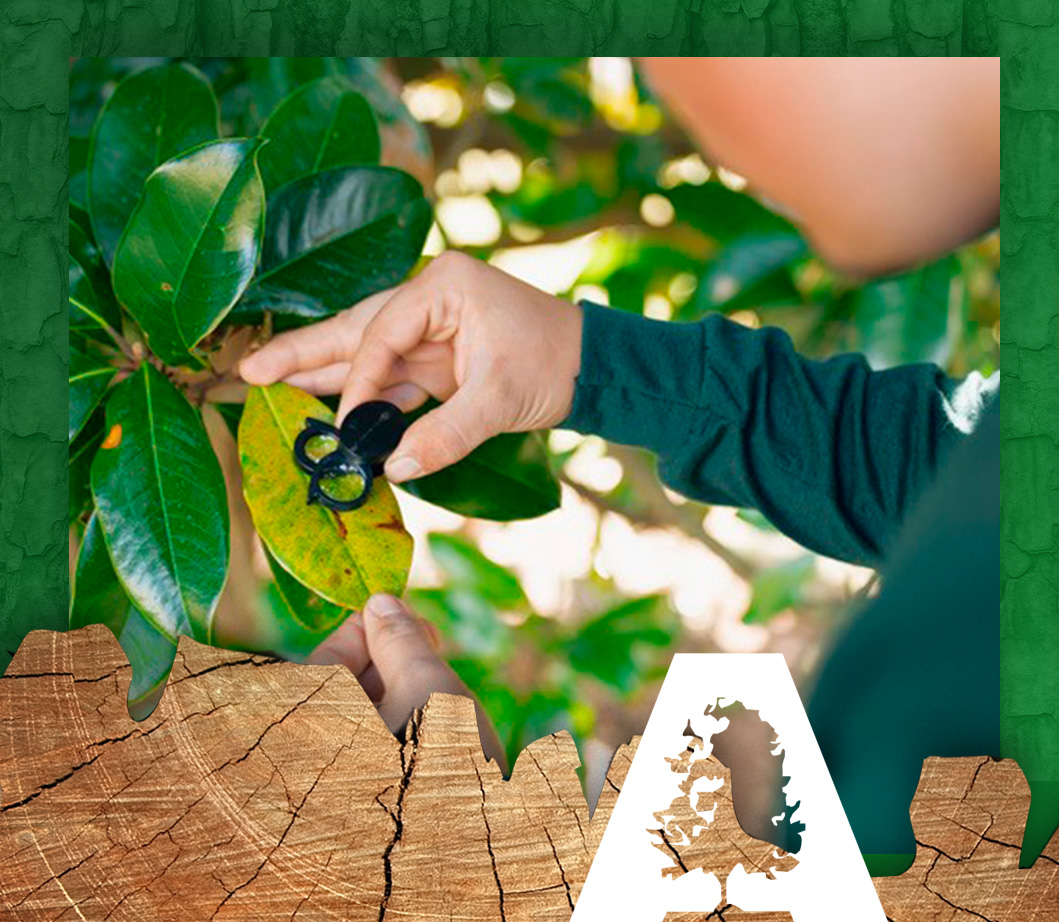
The inventory is the starting point. Care is what follows.
Thinning foliage, stressed roots, or recurring pest issues may point to a need for further diagnosis. An inventory helps connect those observations with a plant health care plan based on the tree’s needs.
Good questions. Clear answers.
Your property sets the scope. Here’s what to discuss before starting an inventory.
-
What is included in a tree inventory?The agreed scope may include tree identification, species, trunk diameter, location, visible condition, photographs, and care recommendations. We define which trees and areas are included, along with the reporting and mapping requirements, before fieldwork.
-
Is an inventory the same as a tree risk assessment?No. An inventory creates a record of trees and agreed observations. A formal tree risk assessment evaluates risk within a defined scope and time frame. If inventory observations indicate a need for further assessment, that service can be discussed separately.
-
What records will we receive?Your proposal defines the deliverables. Options to discuss include an organized tree schedule, mapped locations, photographs, a summary report, maintenance priorities, and data exports. File formats and future updates should be agreed before work begins.
-
Can this help our board plan a maintenance budget?Yes. An inventory can help group recommendations by priority and organize work into phases. Pricing for recommended pruning, treatments, removals, or other work is provided through a separate proposal.
-
Can an inventory support construction or permit planning?Discuss the jurisdiction and project requirements before fieldwork so we can determine the appropriate documentation scope. A general maintenance inventory may not satisfy a development submission. Inventories do not establish property boundaries or guarantee permit approval.
-
How often should an inventory be updated?The update schedule depends on the property, tree conditions, site use, and management goals. Removals, planting, significant storm damage, construction, and changes in tree condition are reasons to review affected records. Discuss a suitable inspection and update schedule with your arborist.
-
What determines the cost?Property size, tree count, access, survey scope, mapping detail, and reporting requirements influence pricing. Start with your property location, approximate size, and goals so we can prepare an appropriate proposal.
A clearer picture today. A better plan for tomorrow.
Share your property location, approximate size, and what you want to accomplish. We’ll help define the right scope for your tree inventory.